
Temperature Trade-Offs in High-Altitude Himalayan Marmot Burrowing: Balancing Predator Avoidance and Energy Expenditure
Article Sidebar
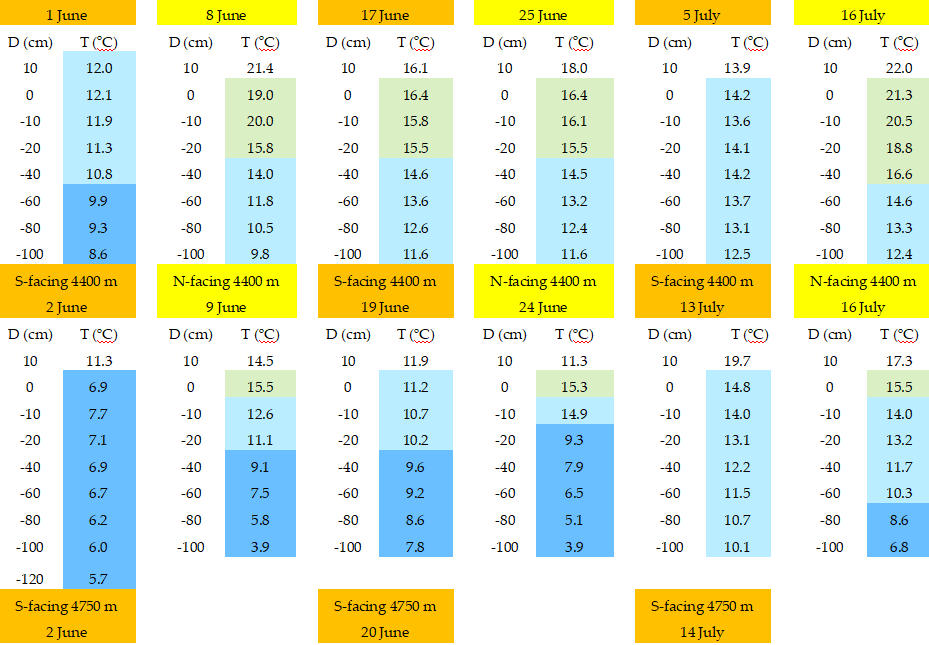
 View
PDF
View
PDF
Section
 How to Cite
Main Article Content
Article Details
References
[1]Ahmed, T., Shoeb, M., Chandan, P., & Khan, A. (2016). On the status of the long-tailed marmot Marmota caudata (Mammalia: Rodentia: Sciuridae) in Kargil, Ladakh (Indian Trans-Himalaya). Journal of Threatened Taxa, 8(9), 9171–9176. https://doi.org/10.11609/jott.2731.8.9.9171-9176
[2]Blumstein, D. T., & Foggin, J. M. (1997). Effects of vegetative variation on weaning success, overwinter survival, and social group density in golden marmots (Marmota caudata aurea). Journal of Zoology, 243(1), 57–69. https://doi.org/10.1111/j.1469-7998.1997.tb05756.x
[3]Grizzell, R. A., Jr. (1955). A study of the southern woodchuck, Marmota monax monax. The American Midland Naturalist, 53(2), 257–293. https://doi.org/10.2307/2422068
[4]Barash, D. P. (1989). Marmots: Social behavior and ecology. Stanford University Press.
[5]Shrestha, T. (2016). Marmota himalayana. The IUCN Red List of Threatened Species 2016, e.T12826A115106426.
[6]Nikol'skii, A. A., & Ulak, A. (2006). Key factors determining the ecological niche of the Himalayan marmot, Marmota himalayana Hodgson (1841). Russian Journal of Ecology, 37(1), 46–52. https://doi.org/10.1134/S1067413606010085
[7]Chetia, H., & Chatakonda, M. K. (2023). Record of Himalayan marmot Marmota himalayana (Hodgson, 1841) (Rodentia: Sciuridae) from Arunachal Pradesh, India. Journal of Threatened Taxa, 15(5), 23262–23265. https://doi.org/10.11609/jott.8402.15.5.23262-23265
[8]Zhang, L., Guo, C., Xiao, Y. H., & Xiang, Z. F. (2019). Den characteristics and their ecological significance in Himalayan marmots (Marmota himalayana). Acta Theriologica Sinica, 39(3), 258–265.
[9]Vanisova, E. A., & Nikol’skii, A. A. (2021). The Himalayan marmot Marmota himalayana (Hodgson, 1841) of Nepal is not the bobak marmot Marmota bobak (Müller, 1776) (Mammalia: Rodentia: Sciuridae). In Biodiversität und Naturausstattung im Himalaya VII (pp. 99–102). Naturkundemuseum Erfurt e.V.
[10]Wang, B., & French, H. M. (1995). Permafrost on the Tibet Plateau, China. Quaternary Science Reviews, 14(3), 255–274. https://doi.org/10.1016/0277-3791(95)00006-B
[11]Cui, X., & Graf, H.-F. (2009). Recent land cover changes on the Tibetan Plateau: A review. Climatic Change, 94(1–2), 47–61. https://doi.org/10.1007/s10584-009-9556-8
[12]Gao, Y. C., & Liu, M. F. (2013). Evaluation of high-resolution satellite precipitation products using rain gauge observations over the Tibetan Plateau. Hydrology and Earth System Sciences, 17(2), 837–849. https://doi.org/10.5194/hess-17-837-2013
[13]Shafiq, M. U., Bhat, M. S., Rasool, R., Ahmed, P., Singh, H., & Hassan, H. (2016). Variability of precipitation regime in Ladakh region of India from 1901–2000. Journal of Climatology & Weather Forecasting, 4(2), 1000165. https://doi.org/10.4172/2332-2594.1000165
[14]Panthi, J., Dahal, P., Shrestha, M. L., Aryal, S., Krakauer, N. Y., Pradhanang, S. M., Lakhankar, T., Jha, A. K., Sharma, M., & Karki, R. (2015). Spatial and temporal variability of rainfall in the Gandaki River Basin of Nepal Himalaya. Climate, 3(1), 210–226. https://doi.org/10.3390/cli3010210
[15]Péwé, T. L. (1983). Alpine permafrost in the contiguous United States: A review. Arctic and Alpine Research, 15(2), 145–156. https://doi.org/10.1080/00040851.1983.12004339
[16]Tsytovich, N. A. (1975). The mechanics of frozen ground. Scripta Book Co;
[17]Zhou, Y., & Guo, D. (1982). Principal characteristics of permafrost in China (in Chinese). Journal of Glaciology and Geocryology, 4(1), 1–19. https://doi.org/10.7522/j.issn.1000-0240.1982.00011982
[18]Fang, H., Zhang, B., Yao, Y., Zhu, Y., & Pang, Y. (2011). Mass elevation effect and its contribution to the altitude of snowline in the Tibetan Plateau and surrounding areas. Arctic, Antarctic, and Alpine Research, 43(2), 207–212. https://doi.org/10.1657/1938-4246-43.2.207
[19]Gruber, S., Fleiner, R., Guegan, E., Panday, P., Schmid, M.-O., Stumm, D., Wester, P., Zhang, Y., & Zhao, L. (2017). Review article: Inferring permafrost and permafrost thaw in the mountains of the Hindu Kush Himalaya region. The Cryosphere, 11(1), 81–99. https://doi.org/10.5194/tc-11-81-2017
[20]Fukui, K., Fujii, Y., Ageta, Y., & Asahi, K. (2007). Changes in the lower limit of mountain permafrost between 1973 and 2004 in the Khumbu Himal, the Nepal Himalayas. Global and Planetary Change, 55(4), 251–256. https://doi.org/10.1016/j.gloplacha.2006.06.002
[21]Pfister, O. (2004). Birds and mammals of Ladakh. Oxford University Press.
[22]Werhahn, G., Kusi, N., Li, X., Chen, C., Zhi, L., Lázaro Martín, R., Sillero-Zubiri, C., & Macdonald, D. W. (2019). Himalayan wolf foraging ecology and the importance of wild prey. Global Ecology and Conservation, 20, e00780. https://doi.org/10.1016/j.gecco.2019.e00780
[23]Armitage, K. B. (1962). Social behaviour of a colony of the yellow-bellied marmot (Marmota flaviventris). Animal Behaviour, 10, 319–331. https://doi.org/10.1016/0003-3472(62)90055-6
[24]Kramer, D. L., & Bonenfant, M. (1997). Direction of predator approach and the decision to flee to a refuge. Animal Behaviour, 54(2), 289–295. https://doi.org/10.1006/anbe.1996.0360
[25]Schmidt, K., Jędrzejewski, W., Theuerkauf, J., Kowalczyk, R., Okarma, H., & Jędrzejewska, B. (2008). Reproductive behaviour of wild-living wolves in Białowieża Primeval Forest (Poland). Journal of Ethology, 26(1), 69–78. https://doi.org/10.1007/s10164-006-0031-y
[26]Garland, T., Jr. (1983). The relation between maximal running speed and body mass in terrestrial mammals. Journal of Zoology, 199(2), 157–170. https://doi.org/10.1111/j.1469-7998.1983.tb02087.x
[27]Brown, L., & Amadon, D. (1968). Eagles, hawks and falcons of the world (Vols. 1–2). Country Life Books.
[28]Aryal, A., Hopkins, J. B., III, Raubenheimer, D., Ji, W., & Brunton, D. (2012). Distribution and diet of brown bears in the upper Mustang Region, Nepal. Ursus, 23(2), 231–236. https://doi.org/10.2192/URSUS-D-11-00015.1
[29]Schaller, G. B., Li, H., Talipu, Lu, H., Ren, J., Qiu, M., & Wang, H. (1987). Status of large mammals in the Taxkorgan Reserve, Xinjiang, China. Biological Conservation, 42(1), 53–71. https://doi.org/10.1016/0006-3207(87)90052-8
[30]Nawaz, M. A., Valentini, A., Khan, N. K., Miquel, C., Taberlet, P., & Swenson, J. E. (2019). Diet of the brown bear in Himalaya: Combining classical and molecular genetic techniques. PLOS ONE, 14(12), e0225698. https://doi.org/10.1371/journal.pone.0225698
[31]Craighead, F. C., Jr., & Craighead, J. J. (1972). Data on grizzly bear denning activities and behavior obtained by using wildlife telemetry. Bears: Their Biology and Management, 2, 84–106. https://doi.org/10.2307/3872573
[32]Ghuman, B. S., & Lal, R. (1985). Thermal conductivity, thermal diffusivity, and thermal capacity of some Nigerian soils. Soil Science, 139(1), 74–80. https://doi.org/10.1097/00010694-198501000-00011
[33]Kodešová, R., Vlasáková, M., Fér, M., Teplá, D., Jakšík, O., Neuberger, P., & Adamovský, R. (2013). Thermal properties of representative soils of the Czech Republic. Soil and Water Research, 8(4), 141–150. https://doi.org/10.17221/33/2013-SWR
[34]Rohde, R., Muller, R., Jacobsen, R., Perlmutter, S., Rosenfeld, A., Wurtele, J., Curry, J., Wickham, C., & Mosher, S. (2013). Berkeley Earth temperature averaging process. Geoinformatics & Geostatistics: An Overview, 1(2), 1–13. https://doi.org/10.4172/2327-4581.1000103
[35]Melcher, J. C., Armitage, K. B., & Porter, W. P. (1990). Thermal influences on the activity and energetics of yellow-bellied marmots (Marmota flaviventris). Physiological Zoology, 63(4), 803–820. https://doi.org/10.1086/physzool.63.4.30158178
[36]Armitage, K. B., Melcher, J. C., & Ward, J. M., Jr. (1990). Oxygen consumption and body temperature in yellow-bellied marmot populations from montane-mesic and lowland-xeric environments. Journal of Comparative Physiology B, 160(5), 491–502. https://doi.org/10.1007/BF00258976
[37]Ortmann, S., & Heldmaier, G. (2000). Regulation of body temperature and energy requirements of hibernating Alpine marmots (Marmota marmota). American Journal of Physiology-Regulatory, Integrative and Comparative Physiology, 278(3), R698–R704. https://doi.org/10.1152/ajpregu.2000.278.3.R698
[38]Namgail, T., Rawat, G. S., Mishra, C., van Wieren, S. E., & Prins, H. H. T. (2012). Biomass and diversity of dry alpine plant communities along altitudinal gradients in the Himalayas. Journal of Plant Research, 125(1), 93–101. https://doi.org/10.1007/s10265-011-0430-1
[39]Rodrigue, I., Allainé, D., Ramousse, R., & Le Berre, M. (1992). Space occupation strategy related to ecological factors in Alpine marmot (Marmota marmota). In B. Bassano, P. Durio, U. Gallo Orsi, & E. Macchi (Eds.), Proceedings of the 1st International Symposium on Alpine Marmot and Genus Marmota (pp. 135–141). Università degli Studi di Torino.
[40]Guo, C., Gao, S., Zhou, S., Zhang, L., & Xiang, Z. (2020). Burrowing and anti-predator requirements determine the microhabitat selection of Himalayan marmot in Zoige Wetland. Zoological Science, 37(6), 554–562. https://doi.org/10.2108/zs190148
[41]Staniec, M., & Nowak, H. (2016). The application of energy balance at the bare soil surface to predict annual soil temperature distribution. Energy and Buildings, 127, 56–65. https://doi.org/10.1016/j.enbuild.2016.05.047
[42]Mihalakakou, G., Santamouris, M., Lewis, J. O., & Asimakopoulos, D. N. (1997). On the application of the energy balance equation to predict ground temperature profiles. Solar Energy, 60(3–4), 181–190. https://doi.org/10.1016/S0038-092X(97)00012-1
[43]Wang, S. L., Jin, H. J., Li, S. X., & Zhao, L. (2000). Permafrost degradation on the Qinghai–Tibet Plateau and its environmental impacts. Permafrost and Periglacial Processes, 11(1), 43–53. https://doi.org/10.1002/(SICI)1099-1530(200001/03)11:1<43::AID-PPP332>3.0.CO;2-H
[44]Romanovsky, V. E., Smith, S. L., & Christiansen, H. H. (2010). Permafrost thermal state in the polar Northern Hemisphere during the International Polar Year 2007–2009: A synthesis. Permafrost and Periglacial Processes, 21(2), 106–116. https://doi.org/10.1002/ppp.689
[45]Rowan, A. V. (2017). The ‘Little Ice Age’ in the Himalaya: A review of glacier advance driven by Northern Hemisphere temperature change. The Holocene, 27(2), 292–308. https://doi.org/10.1177/0959683616658530
[46]Smith, A. T., Xie, Y., Hoffmann, R. S., Lunde, D., MacKinnon, J., Wilson, D. E., & Wozencraft, W. C. (2010). A guide to the mammals of China. Princeton University Press. https://doi.org/10.1515/9781400834112
[47]Snyder, G. K., & Nestler, J. R. (1990). Relationships between body temperature, thermal conductance, Q₁₀ and energy metabolism during daily torpor and hibernation in rodents. Journal of Comparative Physiology B, 159(6), 667–675. https://doi.org/10.1007/BF00691712
[48]Bai, L., Liu, B., Ji, C., Zhao, S., Liu, S., Wang, R., Wang, W., Yao, P., Li, X., Fu, X., Yu, H., Liu, M., Han, F., Guan, N., Liu, H., Liu, D., Tao, Y., Wang, Z., Yan, S., … Liu, E. (2019). Hypoxic and cold adaptation insights from the Himalayan marmot genome. iScience, 11, 519–530. https://doi.org/10.1016/j.isci.2018.11.034
[49]Prins, H. H. T. (1982). Why are mosses eaten in cold environments only? Oikos, 38(3), 374–380. https://doi.org/10.2307/3544680
[50]Thorp, C. R., Ram, P. K., & Florant, G. L. (1994). Diet alters metabolic rate in the yellow-bellied marmot (Marmota flaviventris) during hibernation. Physiological Zoology, 67(5), 1213–1229. https://doi.org/10.1086/physzool.67.5.30163890
[51]Aryal, A., Brunton, D., Ji, W., Rothman, J., Coogan, S. C. P., Adhikari, B., Su, J., & Raubenheimer, D. (2015). Habitat, diet, macronutrient, and fiber balance of Himalayan marmot (Marmota himalayana) in the Central Himalaya, Nepal. Journal of Mammalogy, 96(2), 308–316. https://doi.org/10.1093/jmammal/gyv032
[52]LaForce, F. M., Acharya, I. L., Stott, G., Brachman, P. S., Kaufman, A. F., Clapp, R. F., & Shah, N. K. (1971). Clinical and epidemiological observations on an outbreak of plague in Nepal. Bulletin of the World Health Organization, 45(6), 693–706
[53]Li, Y., Cui, Y., Hauck, Y., Platonov, M. E., Dai, E., Song, Y., Guo, Z., Pourcel, C., Dentovskaya, S. V., Anisimov, A. P., Yang, R., & Vergnaud, G. (2009). Genotyping and phylogenetic analysis of Yersinia pestis by MLVA: Insights into the worldwide expansion of Central Asia plague foci. PLOS ONE, 4(6), e6000. https://doi.org/10.1371/journal.pone.0006000
[54]Riehm, J. M., Vergnaud, G., Kiefer, D., Damdindorj, T., Dashdavaa, O., Khurelsukh, T., Zöller, L., Wölfel, R., Le Flèche, P., & Scholz, H. C. (2012). Yersinia pestis lineages in Mongolia. PLOS ONE, 7(2), e30624. https://doi.org/10.1371/journal.pone.0030624
[55]Galdan, B., Baatar, U., Molotov, B., & Dashdavaa, O. (2010). Plague in Mongolia. Vector-Borne and Zoonotic Diseases, 10(1), 69–75. https://doi.org/10.1089/vbz.2009.0047
[56]Eroshenko, G. A., Nosov, N. Y., Krasnov, Y. M., Oglodin, Y. G., Kukleva, L. M., Guseva, N. P., Kuznetsov, A. A., Abdikarimov, S. T., Dzhaparova, A. K., & Kutyrev, V. V. (2017). Yersinia pestis strains of ancient phylogenetic branch 0.ANT are widely spread in the high-mountain plague foci of Kyrgyzstan. PLOS ONE, 12(10), e0187230. https://doi.org/10.1371/journal.pone.0187230
[57]Anisimov, A. P. (2002). Factors of Yersinia pestis providing circulation and persistence of plague pathogen in ecosystems of natural foci. Communication 2. Molecular Genetics, Microbiology and Virology, (5), 3–11.
[58]Barbieri, R., Signoli, M., Chevé, D., Costedoat, C., Tzortzis, S., Aboudharam, G., Raoult, D., & Drancourt, M. (2021). Yersinia pestis: The natural history of plague. Clinical Microbiology Reviews, 34(1), e00044-19. https://doi.org/10.1128/CMR.00044-19
[59]Sariyeva, G., Bazarkanova, G., Maimulov, R., Abdikarimov, S., Kurmanov, B., Abdirassilova, A., Shabunin, A., Sagiyev, Z., Dzhaparova, A., Abdel, Z., Mussagaliyeva, R., Morand, S., Motin, V., & Kosoy, M. (2019). Marmots and Yersinia pestis strains in two plague endemic areas of Tien Shan Mountains. Frontiers in Veterinary Science, 6, 207. https://doi.org/10.3389/fvets.2019.00207
[60]Biggins, D. E., & Kosoy, M. Y. (2001). Influences of introduced plague on North American mammals: Implications from ecology of plague in Asia. Journal of Mammalogy, 82(4), 906–916. https://doi.org/10.1644/1545-1542(2001)082<0906:IOIPON>2.0.CO;2
[61]Ge, P., Xi, J., Ding, J., Jin, F., Zhang, H., Guo, L., Zhang, J., Li, J., Gan, Z., Wu, B., Liang, J., Wang, X., & Wang, X. (2015). Primary case of human pneumonic plague occurring in a Himalayan marmot natural focus area Gansu Province, China. International Journal of Infectious Diseases, 33, 67–70. https://doi.org/10.1016/j.ijid.2014.12.044
[62]Dai, R., Qi, M., Xiong, H., Yang, X., He, J., Zhang, Z., Yang, H., Jin, J., Li, X., Xin, Y., Yang, Y., Li, C., Li, Z., Xu, J., Wang, Z., Li, W., & Wei, B. (2019). Serological epidemiological investigation of Tibetan sheep (Ovis aries) plague in Qinghai, China. Vector-Borne and Zoonotic Diseases, 19(1), 3–7. https://doi.org/10.1089/vbz.2017.2257
[63]Dai, R., Wei, B., Xiong, H., Yang, X., Peng, Y., He, J., Jin, J., Wang, Y., Zha, X., Zhang, Z., Liang, Y., Zhang, Q., Xu, J., Wang, Z., & Li, W. (2018). Human plague associated with Tibetan sheep originates in marmots. PLOS Neglected Tropical Diseases, 12(8), e0006635. https://doi.org/10.1371/journal.pntd.0006635
[64]Schotthoefer, A. M., Bearden, S. W., Vetter, S. M., Holmes, J., Montenieri, J. A., Graham, C. B., Woods, M. E., Eisen, R. J., & Gage, K. L. (2011). Effects of temperature on early-phase transmission of Yersina pestis by the flea, Xenopsylla cheopis. Journal of Medical Entomology, 48(2), 411–417. https://doi.org/10.1603/ME10155
[65]Namgail, T., Fox, J. L., & Bhatnagar, Y. V. (2007). Carnivore-caused livestock mortality in Trans-Himalaya. Environmental Management, 39(4), 490–496. https://doi.org/10.1007/s00267-005-0178-2
[66]Lachungpa, U. (2009). Indigenous lifestyles and biodiversity conservation issues in North Sikkim. Indian Journal of Traditional Knowledge, 8(1), 51–55..
[67]Naoroji, R., & Sangha, H. S. (2011). Threats to habitat and wildlife in Changthang and Rupshu areas of Ladakh: A case study at Hanle. Indian BIRDS, 7(1), 2–6.
[68]Ghosh, S., Arvind, D. G., & Dobbie, S. (2019). Evaluation of microclimates and assessment of thermal comfort of Panthera leo in the Masai Mara National Reserve, Kenya. International Journal of Biometeorology, 63(3), 269–279. https://doi.org/10.1007/s00484-018-01660-3
[69]Joshi, B. D., Sharma, L. K., Thakur, M., Kaur, A., & Chandra, K. (2020). Assessment of population and impacts of feral dogs on wildlife, livestock and humans to design a feral dog management strategy in the Lahaul-Pangi landscape of Himachal Pradesh. Zoological Survey of India.

This work is licensed under a Creative Commons Attribution 4.0 International License.